






Retail 2026: Why Behavior Is Replacing Sales as the Primary Signal
For the past decade, retail analytics has been dominated by digital thinking: clicks, impressions, attribution windows, and dashboards built for screens — not stores.
But in 2026, we’re seeing a clear shift.
The most actionable, least manipulated, and most underutilized data in retail isn’t online. It’s human behavior inside physical stores.
Here are five in-store behavior analytics trends shaping how leading retailers and brands are rethinking performance, without relying on digital media, mobile IDs, or screens.
1. In-Store Behavior Is Replacing Proxies as the Primary Signal
For years, retail teams relied on proxies:
- Sales as a lagging indicator
- Footfall as a blunt metric
- Campaign exposure as an assumption
In 2026, the focus is shifting to observable human behavior:
- Where shoppers stop
- What they engage with
- How long they hesitate
- Which paths actually lead to conversion
Behavior is no longer a supporting metric, it’s the foundation. Because behavior happens before purchase, it explains why outcomes change, not just that they changed.
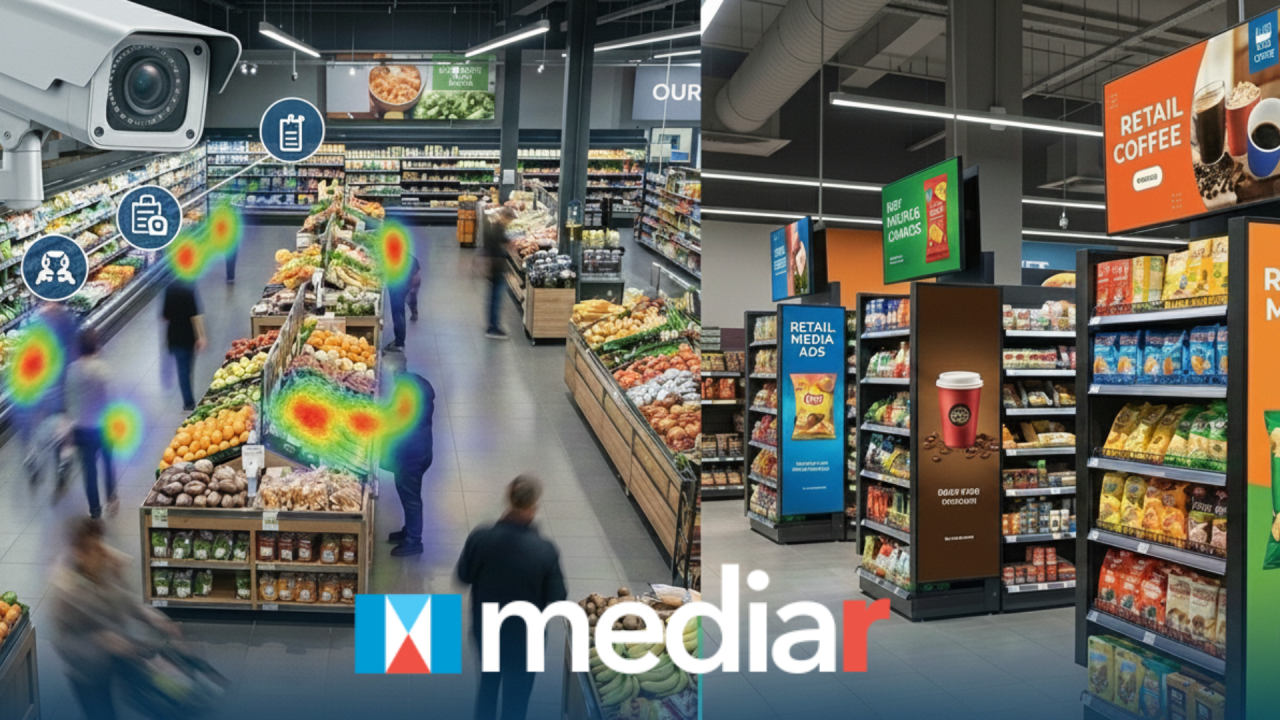
2. Stores Are Finally Measured as Dynamic Environments, Not Static Boxes
Most stores are still evaluated as if every square meter performs equally.
That’s changing.
Retailers are increasingly analyzing:
- Zone-level performance
- Category adjacency effects
- High-friction vs high-conversion areas
- Behavioral “hot” and “cold” spots
In-store analytics in 2026 treats the store as a living system, where layout, visibility, congestion, and shopper intent interact in measurable ways.
This unlocks a new level of operational intelligence, without adding a single digital touchpoint.
3. Incrementality Moves From Media to Merchandising
One of the biggest shifts we’re seeing: incrementality is no longer just a media question.
Retailers and brands now ask:
- Did this display change shopper behavior?
- Did this placement pull shoppers into a category?
- Did this activation accelerate or interrupt the journey?
In-store behavior analytics allows teams to establish behavior-adjusted baselines, isolating what truly moved the needle versus what would have happened anyway.
This is where in-store stops being “brand theater” and becomes measurable performance infrastructure.
4. Store-Level Truth Is Becoming the Neutral Measurement Layer
Digital data is fragmented, platform-owned, and increasingly opaque.
In-store behavior data is different:
- It’s channel-agnostic
- Brand-neutral
- Retailer-owned
- Grounded in real human movement
In 2026, in-store analytics is emerging as a neutral measurement layer, one that brands, retailers, and partners can align around without debating methodologies or attribution models.
When everyone can see the same behavior, conversations change from opinions to evidence.
5. The Future of In-Store Analytics Is Human, Not “High-Tech”
Importantly, the most impactful in-store analytics isn’t about flashy technology.
It’s about:
- Respecting shopper privacy
- Measuring anonymously and ethically
- Understanding intent, not identity
- Designing stores for people, not algorithms
The winners in 2026 won’t be the retailers with the most screens, but the ones who understand how people actually move, pause, choose, and decide inside physical spaces.
Final Thought: The Store Was Never “Offline”
Physical retail didn’t lose relevance, it lost visibility.
In-store behavior analytics is giving that visibility back, not by digitizing the store, but by listening to it.
As we look ahead, the most powerful retail insights won’t come from adding more digital layers, they’ll come from finally understanding what’s been happening in stores all along.