







The 19-Second Decision: Why Energy Drink Shoppers Stop But Don’t Buy
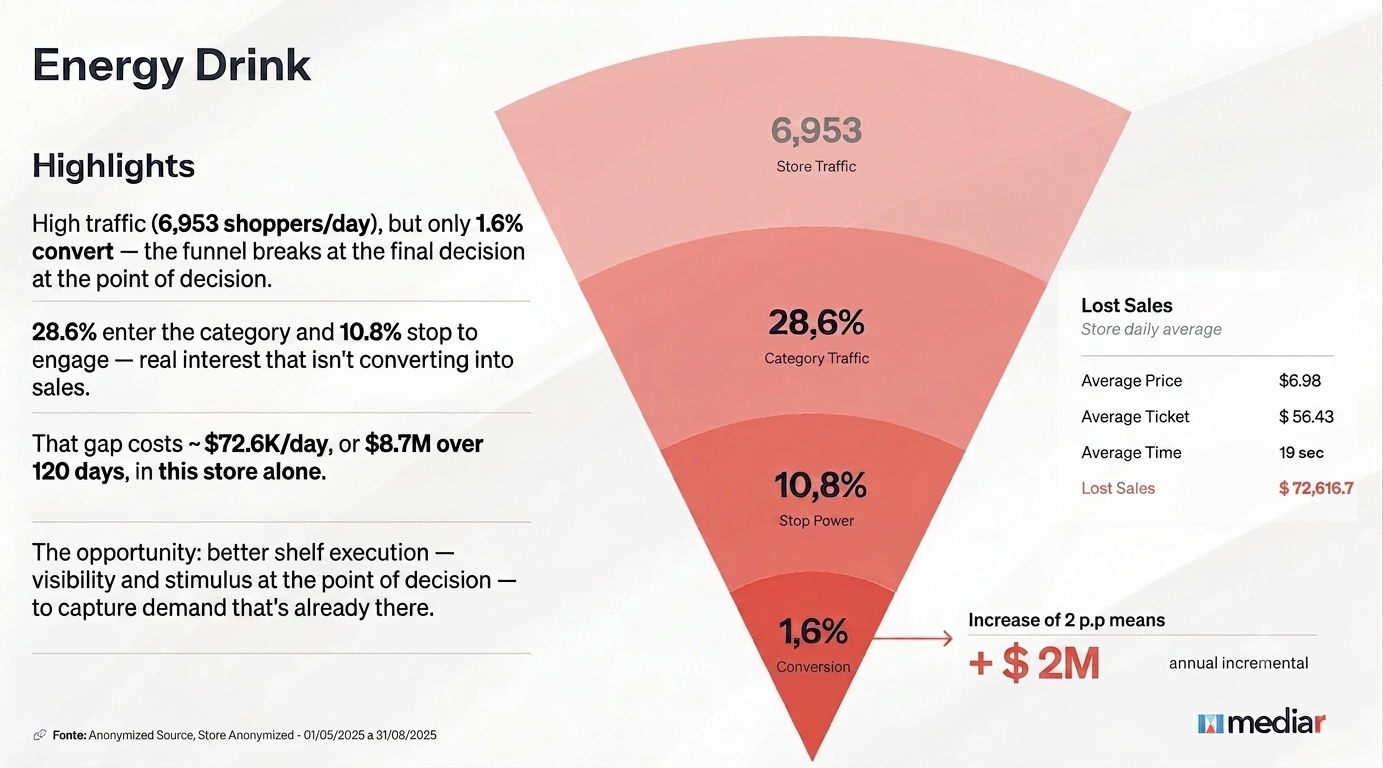
6,953 shoppers walked through the store. Only 1.6% walked out with an energy drink.
At first glance, that looks like a traffic problem, or maybe an interest problem. It’s neither. The shopper data tells a more specific — and more fixable — story: the energy drink category is losing the sale in the final seconds at shelf, not before.
Following the funnel
Using in-store computer vision data pulled from existing CCTV infrastructure, the full path from store entry to purchase breaks down like this:
- 6,953 shoppers/day move through the store
- 28.6% enter the energy drink category
- 10.8% stop at the shelf — real, physical engagement with the display
- 1.6% actually convert
The drop-off isn’t happening at the front door. Nearly a third of all shoppers reach the category, and over a tenth of total store traffic stop to look. That’s genuine demand showing up in front of the shelf. What happens next — or doesn’t — is where the category loses almost all of it.
Shoppers are stopping. They’re considering. And then most of them walk away empty-handed. That gap between stopping and buying is the story.
What the gap is worth
In this single store, the shopper data puts a number on that gap:
| Metric | Value |
|---|---|
| Average price | $6.98 |
| Average ticket | $56.43 |
| Average time at shelf | 19 seconds |
| Lost sales (daily average) | ~$72,616.70 |
Extrapolated over a 120-day window, that’s roughly $8.7M in lost sales — in this store alone.
And the upside is just as concrete: a 2 percentage point lift in conversion at this single location translates to +$2M in annual incremental revenue. Not from driving more people into the store. From winning the decision of shoppers who are already standing at the shelf, energy drink in view, for an average of 19 seconds before they move on.
The real battleground isn’t the aisle — it’s the shelf
In a category as fiercely contested as energy drinks, brand teams and retailers spend enormous effort winning shoppers before they ever reach the store: media, sampling, price promotion, distribution. This data suggests the more decisive battle is happening in a 19-second window at the point of decision, and most of it is currently being lost.
The opportunity isn’t a bigger funnel. It’s better shelf execution, visibility and stimulus at the exact moment a shopper is already engaged, to capture demand that’s already there, rather than trying to manufacture more of it upstream.
That distinction matters for where budget and attention go next: not another campaign to drive traffic, but an investment in what happens in the seconds a shopper is already standing in front of the category.
Why this is only visible now
None of this — the 28.6% category entry rate, the 10.8% stop rate, the 19-second average dwell time — is available in POS data or traditional store audits. It requires measuring actual shopper behavior at shelf: who stops, for how long, and what happens next.
That’s the gap Mediar was built to find. By turning a retailer’s existing CCTV infrastructure into a shopper behavior measurement system, ShopperLab™ surfaces exactly where a category’s funnel is breaking — traffic, category entry, shelf engagement, or conversion — so retailers and CPG brands can act on the moment that actually decides the sale.